


Understanding Mortgage Broker Services and Industry Roles
For many, buying a home is a significant life goal. However, the path to securing the right financing can often feel overwhelming. With countless lenders and loan products available, understanding your options is a major challenge. This is where mortgage broker services offer a valuable solution.
Mortgage brokers act as independent guides, helping borrowers find the best loan options for their unique needs. They simplify a complex process, potentially saving you time and effort.
In this extensive guide, we will explore everything you need to know about mortgage brokers. We will define their role and explain how they differ from loan officers and lenders. We will also outline the primary services they provide and the benefits they bring to various clients. From understanding mortgage pre-qualificationto navigating unique financial situations, we aim to equip you with the knowledge to make informed decisions on your home financing journey.
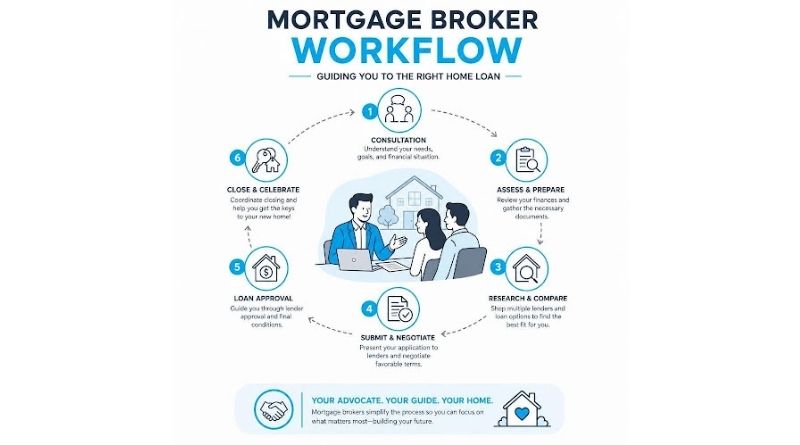
The landscape of home financing involves several key players, and distinguishing their roles is crucial for borrowers. At the heart of credit intermediation, mortgage brokers serve as crucial connectors, facilitating market access for both borrowers and lenders. They navigate the complexities of wholesale lending and retail lending to secure optimal outcomes.
Defining Mortgage Brokers vs. Loan Officers and Lenders
A mortgage broker is an independent financial professional who acts as an intermediary between a borrower and multiple lenders. Unlike a direct lender, which funds the loan themselves, or a loan officer, who works exclusively for a single lending institution, a mortgage broker is not tied to any one product or provider. Their primary role is to assist borrowers in obtaining a mortgage loan by shopping around with various lenders to find the most suitable terms and rates. They are not named as the lender in the loan agreement or deed of trust.
The key distinction lies in their affiliation and scope:
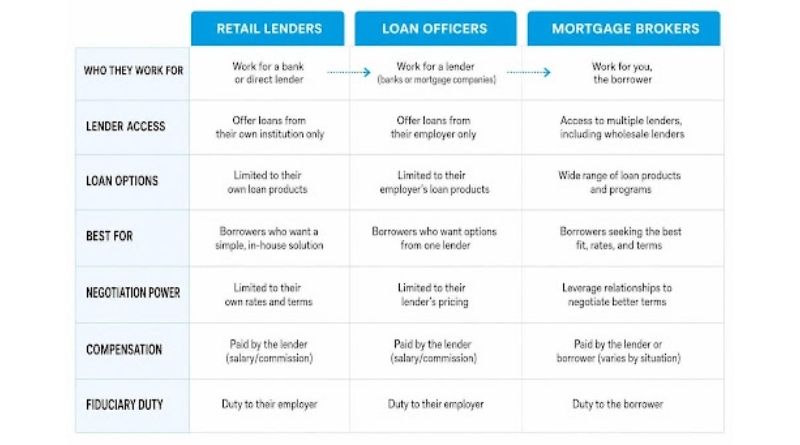
- Mortgage Broker: An independent entity with access to a broad network of lenders, including wholesale lenders. They work on behalf of the borrower to find the best deal across multiple options.
- Loan Officer: An employee of a specific mortgage lender, bank, or credit union. They can only offer the loan products and rates available from their employer. Their scope is limited to their institution’s offerings.
- Mortgage Lender: The financial institution that originates, funds, and often services the mortgage loan. This can be a bank, credit union, or dedicated mortgage company.
Mortgage brokers often operate with a fiduciary duty, meaning they are legally bound to act in the borrower’s best interest. This contrasts with loan officers, who are primarily tasked with selling their employer’s products. Brokers handle much of the application processing and documentation, streamlining the experience for the borrower.
Comprehensive Mortgage Broker Services for Diverse Borrowers
The services provided by mortgage brokers extend far beyond simply finding a loan. They offer a comprehensive suite of support designed to simplify the entire home financing journey. Their responsibilities typically include:
- Needs Assessment: Understanding a borrower’s financial situation, goals, and eligibility criteria.
- Market Research: Tapping into their extensive network of lenders to identify loan products that match the borrower’s profile. This includes comparing interest rates, fees, and terms from multiple sources.
- Negotiation: Leveraging their relationships and market knowledge to negotiate favorable terms on behalf of the borrower.
- Application Assistance: Guiding borrowers through the often-complex application process, ensuring all forms are completed accurately.
- Document Collection and Preparation: Helping borrowers gather and organize necessary financial documents, such as pay stubs, tax returns, bank statements, and credit reports.
- Pre-qualification and Pre-approval:Assisting with initial steps like getting a mortgage pre-qualification, which provides an early estimate of what a borrower might be able to afford, or a more robust pre-approval letter.
- Guidance Through Underwriting and Closing: Acting as a liaison between the borrower and lender, addressing any issues that arise during underwriting, and ensuring a smooth path to closing.
Mortgage brokers are particularly beneficial for various client types due to their ability to offer bespoke financing options:
- First-Time Homebuyers: They demystify the process, explain complex terminology, and guide new buyers through every step.
- Self-Employed Borrowers:Individuals with non-traditional income streams often struggle with conventional lenders. Brokers can connect them with specialized lenders offering bank statement loans or other non-QM (Qualified Mortgage) options.
- High-Net-Worth Individuals and Business Owners: For these clients, brokers can integrate mortgage solutions with broader wealth management goals, structuring complex commercial mortgage loans or financing for international property investments. They provide negotiation, administration, and access to competitive, bespoke financing options tailored to intricate financial portfolios.
- Borrowers with Unique Financial Situations: This includes those with atypical credit histories, significant debt, or seeking financing for unusual property types. Brokers can identify portfolio lenders or those with more flexible underwriting guidelines.
Benefits, Compensation, and Wholesale Market Access
Working with a mortgage broker offers distinct advantages, primarily stemming from their access to a vast lending network and their compensation structure. This access allows them to provide competitive market pricing and manage crucial elements like rate locks, often including options for non-QM loans that are unavailable through traditional retail channels.
Navigating Wholesale Lenders and Non-Traditional Loans
One of the most significant benefits of using a mortgage broker is their ability to access wholesale lenders. Retail lenders, such as large banks or direct mortgage companies, work directly with the public. Wholesale lenders, on the other hand, operate exclusively through intermediaries like mortgage brokers. They typically offer more competitive rates and a wider array of products because they don’t incur the overhead costs of maintaining a retail branch network or extensive marketing to consumers.
Mortgage brokers leverage proprietary pricing systems that evaluate loan costs across multiple wholesale lenders simultaneously. This allows them to quickly identify the most favorable rates and terms for a borrower’s specific situation. Furthermore, brokers often have relationships with wholesale lenders that do not interact with or accept direct applications from the general public, effectively opening up a broader market for borrowers.
This extensive access is particularly valuable for borrowers with unique financial situations or those seeking non-traditional loans:
- Unique Financial Situations: For self-employed individuals with non-traditional income documentation, or those with complex credit histories, brokers can find lenders willing to look beyond standard underwriting criteria. They can identify non-QM (non-Qualified Mortgage) options, which cater to borrowers who don’t fit conventional loan requirements, or work with lenders that specialize in manual underwriting.
- Atypical Properties: If you’re purchasing an unusual property type or one that requires specialized appraisal criteria, a broker can connect you with lenders equipped to handle such unique circumstances, including portfolio lenders who keep loans on their books rather than selling them on the secondary market.
This table highlights the fundamental differences in how various entities operate within the mortgage industry:
How Mortgage Broker Services Are Compensated
Understanding how mortgage brokers are compensated is essential for borrowers. Mortgage brokers can be paid in one of two primary ways:
- Lender-Paid Compensation (LPC): In most cases, the mortgage broker’s fee is paid by the lender. This compensation is typically built into the interest rate or other loan costs, but it does not directly add to the borrower’s closing costs as a separate line item. Federal law, specifically the Truth in Lending Act (TILA) and the Real Estate Settlement Procedures Act (RESPA), ensures transparency. TILA and RESPA also prohibit tying broker compensation to the loan’s interest rate, meaning brokers cannot earn more by steering you towards a higher rate.
- Borrower-Paid Compensation (BPC): Less commonly, the borrower may pay the broker’s fee directly at closing. If the borrower pays, fee structures typically range between 1% and 2% of the total loan principal. Federal law caps mortgage broker fees at 3% of the loan principal.
It is crucial to note that a mortgage broker cannot be paid by both the borrower and the lender on the same transaction. This “single-source” rule is designed to prevent conflicts of interest and ensure fair compensation practices. We always recommend asking upfront whether the compensation will be lender-paid or borrower-paid to avoid any surprises at closing. This transparency is a vital part of the overall home financing process. Lender-paid compensation often means the borrower doesn’t see an explicit broker fee, making it appear similar in cost to working directly with a retail bank loan originator.
Licensing Frameworks and Real Estate Agent Restrictions
The mortgage industry is heavily regulated to protect consumers and ensure ethical practices. Mortgage brokers operate within a strict framework of licensing and compliance, overseen by federal and state authorities. This includes adherence to NMLS compliance and CFPB oversight, with state-specific regulations adding further layers of requirements.
Regulatory Requirements and State-Specific Rules
In the United States, mortgage brokers are primarily regulated through the Nationwide Mortgage Licensing System and Registry (NMLS). The NMLS is a centralized system that standardizes licensing requirements across states, making it easier for professionals to operate in multiple jurisdictions and for consumers to verify credentials. All mortgage loan originators, including brokers, must be licensed through the NMLS, undergo background checks, and complete pre-licensing education and continuing education courses.
Federal oversight is provided by agencies like the Consumer Financial Protection Bureau (CFPB), which enforces regulations under laws such as the Truth in Lending Act (TILA) and the Real Estate Settlement Procedures Act (RESPA). These laws ensure transparency in lending practices, protect consumers from predatory lending, and cap certain fees.
State-specific requirements often supplement the federal framework. For example, in Maryland, mortgage brokers are governed by the Maryland Mortgage Lender Law and COMAR Regulations. As of August 2026, a significant change effective July 1, 2023, means that individual licenses for business locations other than the principal executive office are no longer required, provided these additional locations are disclosed to the Commissioner via NMLS. This streamlines operations for brokers with multiple branches but maintains regulatory oversight. Maryland also has specific housing counseling requirements, ensuring borrowers receive adequate information and support. It is always important for borrowers to verify that their chosen broker is licensed to do business in their specific state through the NMLS consumer access website.
Dual Licensing: Real Estate Agents as Mortgage Brokers
A common question arises regarding whether a real estate agent can also act as a mortgage broker. The answer is yes, but with significant restrictions and potential conflicts of interest. A real estate agent can become a licensed mortgage broker by completing the necessary NMLS pre-licensing training and passing the NMLS exam, adhering to all state-specific requirements.
However, the practice of dual agency, where one individual serves as both the real estate agent and the mortgage broker for the same transaction, is heavily regulated and often discouraged. Key restrictions include:
- FHA Loan Restrictions: Federal regulations prohibit a real estate agent from arranging FHA loans on transactions where they are also acting as the real estate agent. This is a critical point to ensure compliance and avoid potential issues.
- Secondary Market Concerns: Certain secondary mortgage buyers (the entities that purchase loans from originators) may refuse to buy transactions where one individual acts in both capacities, making the loan difficult to sell and potentially impacting the borrower.
- Ethical Considerations: While REALTOR® ethics guide professional conduct, the potential for conflicts of interest is high. A broker’s primary duty is to find the best loan for the borrower, while a real estate agent’s primary duty is to facilitate the property transaction. These interests, though often aligned, can diverge.
Borrowers should be aware of these restrictions and ensure full transparency if considering working with an individual who holds both licenses. It is advisable to verify state-specific disclosure requirements and restrictions regarding dual licensing.
Key Questions to Ask When Interviewing a Mortgage Broker
Choosing the right mortgage broker is a critical step in securing optimal home financing. Just as you would vet any other financial advisor, interviewing potential brokers allows you to assess their experience, fee transparency, and rate strategy. We recommend interviewing multiple brokers to compare their offerings and ensure a good fit.
Here are key questions to ask when vetting a mortgage broker:
- How much experience do you have in the mortgage industry? Look for a broker with at least three years of experience. Seasoned professionals often have deeper lender relationships and more nuanced market knowledge.
- Are you licensed to do business in my state, and what is your NMLS number? Always verify their licensing status and registration number via the Nationwide Mortgage Licensing System and Registry (NMLS) consumer access website. This ensures they are legally authorized to operate.
- How are you compensated, and who pays your fee? As discussed, compensation can be lender-paid or borrower-paid. Understand the fee structure upfront to avoid surprises at closing. Ask for a detailed breakdown of all costs.
- Which lenders do you work with, and do you have access to wholesale rates? A broker’s value lies in their network. Ensure they work with a diverse range of lenders, including wholesale options, to maximize your choices.
- Can you provide references from recent clients? Speaking with past clients can offer valuable insights into a broker’s communication style, responsiveness, and effectiveness.
- How do you handle rate locks, and do you offer float-down options?Interest rates can fluctuate. Understand their policy on locking in a rate and if they offer a “float-down” option, which allows you to secure a lower rate if market rates drop before closing.
- What is your typical communication process and availability? A good broker keeps you informed and is accessible. Discuss how often you’ll communicate and their preferred methods.
- What is your estimated timeline for closing? While not always within their control, an experienced broker can provide realistic expectations for the loan process.
- Can you explain the pros and cons of different loan types relevant to my situation? A broker should be able to educate you on various options (e.g., conventional, FHA, VA, USDA, Jumbo) and help you understand which best suits your needs.
- What are the potential drawbacks or challenges I might face with my specific financial profile? An honest broker will identify potential hurdles early and discuss strategies to overcome them.
By asking these questions, you empower yourself to make an informed decision and select a mortgage broker who is transparent, experienced, and genuinely committed to finding the best financing solution for you.
Frequently Asked Questions
Here we address some common inquiries borrowers have about mortgage broker services, providing clear guidance and promoting consumer protection.
How do mortgage brokers access wholesale mortgage rates?
Mortgage brokers gain access to wholesale mortgage rates primarily through direct relationships with wholesale lenders. These lenders operate exclusively by partnering with intermediaries like brokers, rather than maintaining a public-facing retail presence. Brokers utilize sophisticated pricing systems and technology that allow them to compare loan products and rates from multiple wholesale lenders simultaneously. This direct access to institutional pricing, combined with the lower overhead costs of wholesale lenders, often translates into more competitive rates and a broader range of loan options for borrowers than might be available through traditional retail banks.
Can a mortgage broker help borrowers with poor credit or self-employment income?
Yes, absolutely. Mortgage brokers are particularly valuable for borrowers with unique financial situations, including those with less-than-perfect credit or self-employment income. While traditional lenders might have rigid criteria, brokers can:
- Identify Specialized Lenders: They have access to a network of lenders who specialize in non-Qualified Mortgages (non-QM loans) or have more flexible underwriting guidelines for atypical credit profiles.
- Navigate Non-Traditional Income:For self-employed individuals, brokers can connect them with lenders who accept alternative documentation, such as bank statements or profit and loss statements, instead of traditional W-2s.
- Facilitate Manual Underwriting: In some cases, brokers can work with lenders willing to perform manual underwriting, where a human underwriter reviews a borrower’s entire financial picture rather than relying solely on automated systems.
Their expertise helps match borrowers with the right lender, even when their situation doesn’t fit the conventional mold.
Who pays the fee when using a mortgage broker?
The fee for a mortgage broker is typically paid by either the lender or the borrower, but never both on the same transaction. In most instances, the lender pays the broker’s compensation, which is often built into the loan’s interest rate or other costs and does not appear as a direct fee to the borrower at closing. If the borrower pays the fee directly, it usually ranges from 1% to 2% of the total loan amount, with a federal cap of 3% of the loan principal. It is crucial for borrowers to discuss the compensation structure with their broker upfront to ensure full transparency and understand how the broker is being paid.
Conclusion
The journey to homeownership is significant, and navigating the complexities of home loans can be daunting. Mortgage broker services offer an invaluable resource, acting as expert guides who simplify the process, provide access to a wide array of lenders and loan products, and advocate for the borrower’s best interests. From understanding the nuances of wholesale lending to securing tailored financing for unique situations, brokers empower borrowers to make informed decisions. By asking the right questions and understanding their role, compensation, and regulatory framework, you can leverage the expertise of a mortgage broker to confidently secure the financing that best fits your needs, ensuring a smoother and potentially more cost-effective path to your dream home.
