

Key Takeaways
- Invoice delays often begin with unclear billing details, slow approvals, and inconsistent follow-up.
- Improving the underlying process should come before adding new finance technology.
- Metrics such as days’ sales outstanding, dispute resolution time, and forecast accuracy reveal whether changes are working.
- Automation is most useful for repeatable tasks, while people should handle exceptions, negotiations, and important customer relationships.
- A focused 30-day review can help smaller teams make meaningful improvements without replacing their entire finance system.
Healthy revenue does not automatically mean healthy cash flow. A business can have a full sales pipeline and profitable customer contracts while still struggling to cover payroll, supplier commitments, or growth investments because cash is arriving later than expected. Finance teams need a reliable process for turning completed work into paid invoices with as little friction as possible.
For teams that want greater consistency without adding manual work, AI Powered accounts receivable automation can support routine collection activities. Technology works best, however, when it reinforces a clear process for invoice creation, customer communication, dispute resolution, and cash forecasting.
Why Invoice Delays Still Hurt Growing Businesses
Invoice delays create uncertainty across the organization. If several large customers pay late during the same period, finance leaders may need to delay purchases, reconsider hiring plans, or draw more heavily on working capital. A service company, for example, may finish several projects and issue invoices on time, yet still face regular payroll and operating costs while waiting for customers to complete internal approvals.
Late payment is rarely just a collections problem. It can reflect gaps that occurred earlier, including unclear contract terms, missing purchase order details, incomplete delivery records, or invoices sent to the wrong person. Finance teams should view cash collection as an end-to-end operating process, not simply an activity that begins after an invoice becomes overdue.
Find the Real Cause Before Changing the Process
Begin by mapping the process from completed work to received payment. Review whether invoices are created promptly, whether they reach the correct accounts payable contact, and whether the customer has everything needed to approve payment. Track where an invoice pauses and why.
- Confirm when work, products, or milestones are considered complete.
- Measure how long it takes to create and issue an invoice.
- Verify billing contacts, submission portals, and customer requirements.
- Check for missing purchase orders, incorrect amounts, or unclear terms.
- Record open disputes, assigned owners, next actions, and expected resolution dates.
Make Every Invoice Easier to Approve
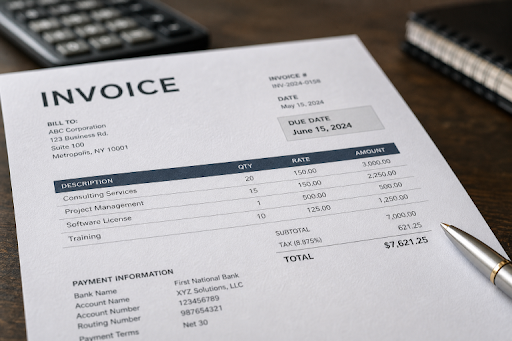
An invoice should answer the customer’s likely questions before they need to ask them. Include a clear invoice number, due date, payment instructions, remittance details, billing contact, itemized charges, and supporting documentation when it is relevant. Match amounts and descriptions to the contract, purchase order, and delivery records before sending.
Customers are more likely to pause payment when billing information is difficult to interpret or does not align with their internal records. As complex invoices invite questions and delay payment, clarity is a cash management issue as well as a customer-service concern. Where practical, provide convenient digital payment options and send the invoice directly to accounts payable rather than relying only on a day-to-day business contact.
Build a Follow-Up Schedule That Feels Professional
Consistent follow-up is more effective than random escalation. A practical schedule can include a confirmation when the invoice is issued, a courteous reminder shortly before the due date, and a clear check-in soon after the due date. Each message should make it easy for the customer to identify the invoice, ask a question, or explain an approval issue.
- Confirm that the invoice was received and routed correctly.
- Send a friendly pre-due reminder.
- Follow up after the due date with the balance and payment options.
- Ask directly whether a dispute, missing document, or approval step is blocking payment.
- Escalate to a relationship owner when the account value, history, or risk justifies personal attention.
Not every account deserves the same sequence. Adjust communication based on payment history, invoice value, strategic importance, and the reason for the delay. The objective is to stay visible and helpful without treating every customer as a collection problem.
Separate Payment Delays From Invoice Disputes
A customer who needs time to pay is different from a customer who disputes the invoice. Common disputes include pricing discrepancies, missing purchase orders, quantity discrepancies, incomplete proof of delivery, and charges that do not align with the customer’s expectations. Treating all overdue invoices alike can obscure the real issue and slow resolution.
Assign each dispute to one accountable owner, document the next action, and set a realistic target date. Then review recurring dispute categories. Repeated billing questions may point to a problem in sales handoffs, contract setup, service delivery, or invoice data rather than an isolated customer complaint.
Use Automation for Routine Work, Not Human Judgment
Automation can schedule reminders, track responses, update invoice status, match payments, and prioritize accounts based on defined rules. These tasks benefit from consistency and can reduce the time employees spend searching across inboxes and systems.
Human review remains essential for commercial disputes, unusual balances, credit concerns, payment negotiations, and high-value customer relationships. Microsoft’s human-led, AI-agent-assisted support system illustrates this balance by using AI for prioritization, customer case summaries, payment matching, response drafting, and case routing. At the same time, finance professionals remain involved in the work.
Track the Metrics That Show Real Progress
- Days Sales Outstanding: The average time between invoicing and payment.
- Average Days to Resolve Disputes:The time required to close billing issues.
- Invoice Accuracy Rate: The share of invoices sent without errors or missing requirements.
- Promise-to-Pay Accuracy: How often promised payment dates match actual payment dates.
- Collection Touch Time: Staff time spent on routine follow-up activity.
- Cash Forecast Accuracy: How closely expected receipts align with actual collections.
A Practical 30-Day Plan for Smaller Finance Teams
Week One: Measure the Current Process
List open invoices by age, value, and customer. Identify the most frequent reasons for delays, then record a baseline for DSO and dispute resolution times.
Week Two: Fix Invoice Quality
Update invoice templates, verify billing contacts, standardize payment terms, and identify which documents customers regularly require before approval.
Week Three: Add Consistent Follow-Up
Create pre-due and post-due reminders, define escalation points, and ensure every overdue account has a documented next action.
Week Four: Review and Refine
Compare payment timing with the first week, review unresolved disputes, and identify repetitive tasks that can be automated without losing appropriate oversight.
Common Mistakes to Avoid
- Sending identical reminders to every customer regardless of context.
- Waiting until invoices are seriously overdue before looking for a problem.
- Measuring collection activity instead of cash received.
- Leaving disputes buried in email threads without ownership or deadlines.
- Adding software before improving data quality and process accountability.
Conclusion
Better cash flow does not always require harsher collection tactics or a major system replacement. Cleaner invoices, faster dispute handling, earlier communication, and disciplined measurement can reduce avoidable delays. When routine work follows a reliable process, finance teams can spend less time chasing updates and more time resolving the exceptions that require judgment. A focused 30-day effort is a practical starting point for building more dependable cash flow throughout 2026.
