
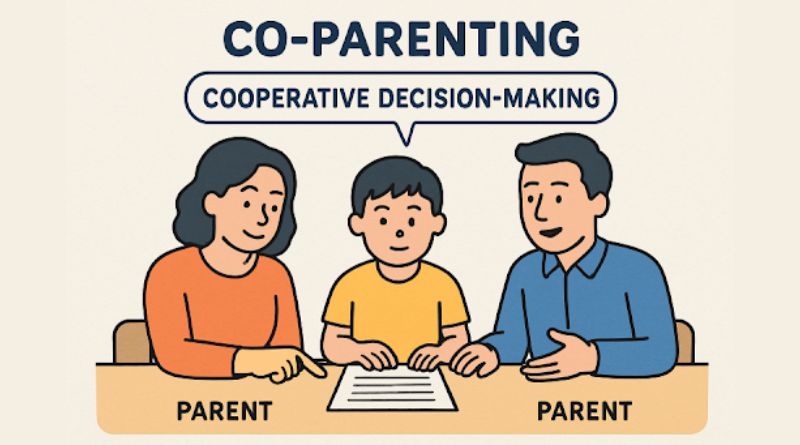

Shared legal custody in New Hampshire represents a legal framework designed to prioritize children’s well-being by enabling both parents to play active roles in decision-making, regardless of changes in the family structure. Shared legal custody allows parents to participate in key aspects of their child’s life, especially when families are navigating separation or divorce. If you require help navigating legal custody matters, visit Legal Custody Help in New Hampshire for expert guidance.
Modern co-parenting arrangements emphasize collaboration and open communication. New Hampshire’s approach reflects evolving research showing that children generally thrive when both parents are involved in decisions about their education, healthcare, and overall well-being. The family court system strongly encourages parents to help formulate their own parenting plans, fostering partnership even after separation and striving for the child’s stability.
Under New Hampshire law, shared legal custody differs from physical custody, which pertains to where and with whom a child primarily resides. Legal custody focuses on giving both parents equal rights to contribute to major decisions in their child’s life. This approach is grounded in the belief that parental involvement from both sides usually serves the best interest of the child.
Courts support the idea that shared legal custody can only work if both parents can communicate effectively and focus on what is best for their child, rather than on past conflict. For many New Hampshire families, this legal structure has proven invaluable. If you are interested in learning more about the specifics of shared legal custody laws and guidelines, consult this resource: NH Family Law Research Guide.
What Shared Legal Custody Means in New Hampshire
In New Hampshire, shared legal custody means both parents have an equal say in significant decisions impacting their child’s future. These include educational direction, medical treatment, religious upbringing, and welfare choices. Shared legal custody does not necessarily assign equal residential time, but it does guarantee input and cooperation on all major child-rearing matters.
The court’s preference is for shared legal custody unless clear evidence shows it is not in the child’s best interests. Judges consider each parent’s ability to communicate and cooperate, the child’s needs and relationships, and any evidence of threat or dysfunction such as domestic violence. As in other states, New Hampshire’s priority is safeguarding the child while giving them the benefit of both parents’ guidance.
Legal Custody Versus Physical Custody
While legal custody concerns decision-making power, physical custody determines where the child lives. One parent may have primary physical custody, yet both retain shared legal custody, reinforcing both parents’ authority in their child’s life even if day-to-day routines involve more time with one parent. This division is common and is outlined clearly in New Hampshire’s family law statutes.
How Courts Determine Shared Legal Custody
New Hampshire courts use a child-focused model when deciding custody arrangements. The judge evaluates each parent’s involvement before separation, the history of caregiving, the child’s adjustment at home and at school, and each parent’s willingness to encourage the child’s relationship with the other parent. Parental fitness and any risk factors, including evidence of abuse, may outweigh a presumption toward shared custody in some cases.
Court-ordered parenting plans must clarify how parents will share responsibilities, resolve disputes, and address future changes. In many cases, courts require mediation as a first step, encouraging parents to reach a workable agreement on their own. Mediation fosters mutual respect and lowers emotional strain, which is especially helpful for children during a family transition.
Benefits and Challenges of Shared Legal Custody
Shared legal custody can result in stronger parental relationships and greater consistency for the child. Studies show that children with access to both parents are more likely to experience positive developmental and behavioral outcomes. Co-parents often report improved communication and greater resilience following a period of adjustment, as both can meaningfully contribute to their child’s future.
However, shared legal custody can pose challenges, especially if prior conflict makes collaboration difficult. Parents must learn to set aside personal differences and communicate clearly, especially when it comes to education, medical needs, and extracurricular activities. When disagreements arise, courts or mediators may step in to arbitrate.
Navigating Co-Parenting in New Hampshire
Successful co-parenting under New Hampshire’s shared legal custody framework requires commitment and flexibility. Parents should focus on what is best for the child and communicate regularly about routines, school issues, medical appointments, and major future decisions. Written parenting plans can help reduce friction, providing clear guidelines for both parties.
Parents are encouraged to develop conflict-resolution strategies and utilize mediation when communication breaks down. By prioritizing their child’s needs, parents can foster a cooperative relationship and prevent disputes from escalating into contentious litigation.
Conclusion
Shared legal custody in New Hampshirebuilds a legal foundation for parents to work collaboratively in their child’s upbringing, supporting both stability and emotional security. While the process can involve adjustments and commitment from both parties, the long-term benefits to children’s well-being are significant. New Hampshire’s system stands as a model for how modern families can maintain active, positive parental roles after separation, supporting children’s best interests at every turn.
