

Key Takeaways
- A meaningful design begins with a loved one’s real story, not a catalog of generic images.
- Simple symbols, readable lettering, and open space often create the most lasting tribute.
- Michigan families should consider cemetery rules, seasonal weather, and long-term maintenance before approving a design.
- Words, artwork, shape, and placement can work together to create a peaceful place for remembrance.
- A final review by close relatives helps prevent errors and ensures the memorial feels true to the person being honored.
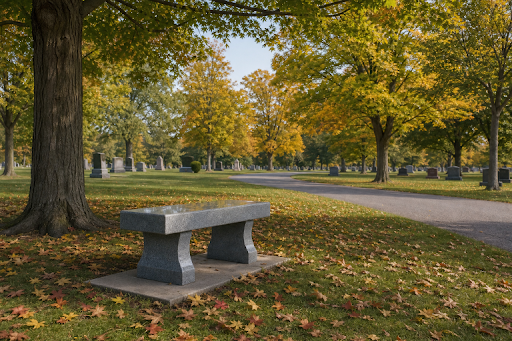
Across Michigan, memorial spaces often sit among mature maples, lakeside breezes, quiet rural roads, and changing four-season landscapes. Thoughtfully designed granite bench memorials can give families a lasting place to pause, share stories, and remember someone in a setting that feels connected to home. The right symbol does not need to be elaborate. A single image, familiar phrase, or gentle detail can express love more clearly than a crowded design. Whether a bench will rest in a cemetery, memorial garden, churchyard, or family gathering place, its design should feel personal, calm, and easy to understand for future generations.
Why Symbols Matter in Memorial Design
Symbols give form to memories that can be difficult to say aloud. A flower may recall a grandmother’s garden, a fishing scene may bring back early mornings on a Michigan lake, and a cardinal may remind relatives of a person’s favorite visitor at the backyard feeder. The most effective choice is not necessarily the most traditional one. It is the one that feels connected to the individual and offers comfort to the people who visit.
Start With the Person’s Story
Before selecting artwork or words, gather memories from relatives and friends. Make a short list of the details that best capture the person’s life: favorite places, pets, hobbies, faith, cultural traditions, work, service, and sayings that still make the family smile. For some families, a companion memorial or a smaller marker may better fit the plan for interment or remembrance. Michigan families considering ashes can explore cremation headstones when they want a separate but connected way to honor a loved one.
Common Symbols and Their Personal Meanings
Familiar images can provide a useful starting point, but each family can give them its own meaning. Consider the following possibilities:
- Flowers: Love, beauty, care, a favorite bloom, or a season of life.
- Trees and leaves: Family roots, endurance, growth, and continuity through generations.
- Birds: Peace, freedom, hope, or a spiritual connection.
- Hearts: Lasting affection, family devotion, and closeness.
- Faith symbols: Belief, comfort, prayer, and eternal life.
- Sunrise, sunset, or water: Renewal, peace, and the completion of a life chapter.
- Books, tools, instruments, or sports details: A direct connection to daily passions and accomplishments.
When a Personal Symbol Works Better
A less common image can sometimes say more than a standard design. A lifelong baker may be remembered through a modest wheat motif. A mechanic who restored classic cars may be honored with a small wrench or tire-track detail. A devoted gardener may be represented by one engraved peony rather than a large collection of unrelated images. Restraint matters. One well-chosen symbol gives visitors room to reflect and lets the inscription remain the focus.
Choosing Words That Feel Natural
Written words set the tone of the memorial. Begin with the full name and accurate life dates, then decide whether a short phrase would add meaning. A line from a prayer, poem, favorite book, or family saying can work beautifully when it truly sounds like the person being remembered.
- Keep the main inscription short enough to read easily from a standing position.
- Choose a language that feels sincere rather than overly formal.
- Read the wording aloud before approving it.
- Check every name, date, apostrophe, and capitalization choice.
- Ask at least two family members to review the final proof.
Shape, Layout, and Readability
The shape of a memorial bench affects its emotional feel. Curved lines may seem gentle and welcoming, while straight edges can look more traditional and formal. A balanced layout guides the eye from the name to the dates and then to the artwork. Leave enough open space so the design does not feel crowded, especially when a bench will be viewed from a path or from a nearby seat. Artwork should support the lettering, not compete with it. Names and dates need clear, appropriately sized characters, while small areas should avoid excessive detail. Review a full-size proof if possible, and imagine how it will look in bright summer sun, autumn shade, and low winter light.
Respecting Faith, Culture, and Family Differences
Memorial decisions can bring together several generations and viewpoints. Invite close relatives to share memories before deciding on a design. Ask which traditions matter most, confirm that cultural or religious symbols are used respectfully, and avoid making assumptions about beliefs that were never important to the person. If opinions differ, a neutral image, such as a tree, a garden bloom, or a peaceful landscape, can create common ground.
Questions to Ask the Cemetery
Every cemetery has its own requirements, so confirm the details before ordering or approving artwork. Ask whether memorial benches are allowed in the selected section and whether there are restrictions involving size, material, color, foundation work, photographs, religious symbols, or nearby flowers and planters.
- Does the cemetery require approval of the inscription and layout?
- Who installs the foundation and places the bench?
- Who is responsible for future leveling, repairs, or cleaning?
- Are personal decorations permitted around the memorial?
Planning for Michigan’s Long-Term Conditions
Michigan memorials must stand through rain, snow, ice, freeze-and-thaw cycles, falling leaves, lawn care, and visitor traffic. Choose engraved details that can be cleaned gently, avoid fragile attachments, and keep a copy of the finished design and installation information. Weather forecasts for Michigan communities also reinforce why families should consider drainage, sunlight, shade, and seasonal access when selecting a placement.
How Shared Memorial Spaces Support Grief
A bench is more than a marker. It can become a quiet destination for a child visiting a grandparent, siblings sharing a story, or friends placing flowers on an anniversary. The physical space gives grief somewhere to rest for a moment. Over time, the symbols and words on the memorial can help younger relatives understand the values, interests, and relationships that shaped the person’s life.
A Simple Five-Step Design Process
- Gather memories: Write down places, hobbies, beliefs, and phrases that matter most.
- Choose one main idea: Select a central symbol or message rather than many competing details.
- Check the setting: Review cemetery requirements, placement, visibility, and maintenance needs.
- Review the proof: Confirm scale, spacing, spelling, dates, and readability.
- Invite a final family review: Give close relatives time to share concerns before approval.
Conclusion
The strongest Michigan memorial bench designs begin with an honest memory and a detail that genuinely reflects the person being remembered. A favorite flower, a familiar phrase, a meaningful place, a lake horizon, or even a simple tool connected to their trade can create a lasting personal connection. Families can also consider the location, surrounding landscape, preferred materials, inscription style, and how the bench will look through Michigan’s changing seasons. Clear lettering, thoughtful spacing, durable finishes, and appropriate placement can help ensure the tribute remains both beautiful and practical. By pairing personal meaning with careful design, cemetery guidance, and realistic long-term planning, families can create a peaceful place for reflection that feels authentic, welcoming, and true to their loved one’s memory for years to come.
